
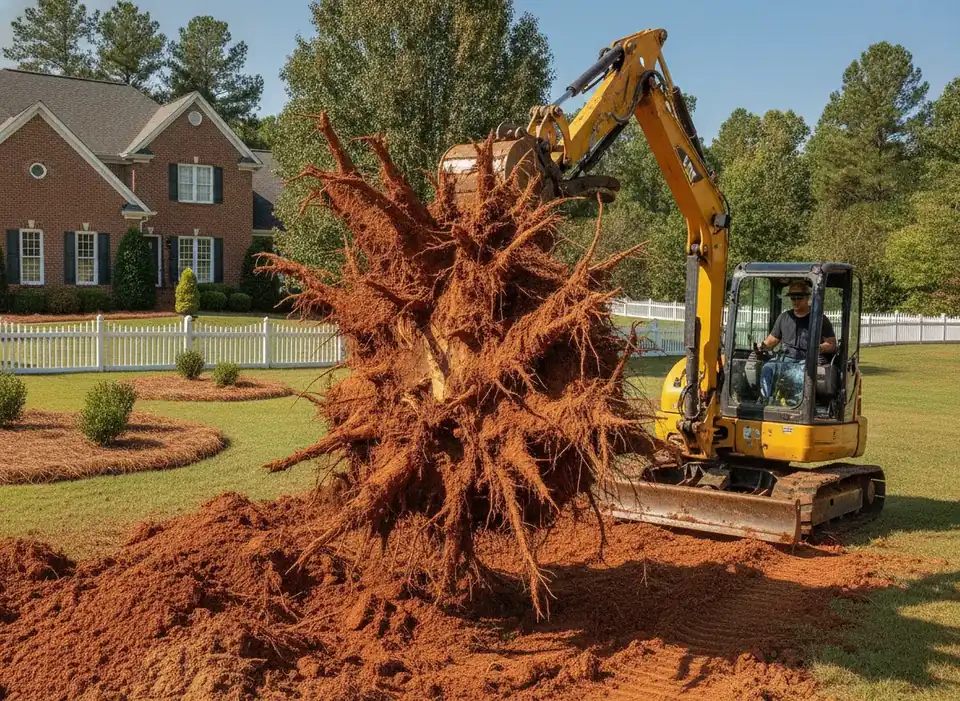
Stump removal
Digging out the stump and main roots when the ground must be clear.
More on stump removalFree quotes from independent local stump grinding companies. We connect Durham-area homeowners with independent local stump grinding and tree companies for free, no-obligation quotes.
Stump Grinding Durham is a referral service, not a stump grinding company. Tell us how many stumps you have and how wide they are, and your request goes to independent local companies that serve your ZIP code. The company you choose sets the price and does the work directly with you. There's no charge to use the free quote form and no obligation to hire anyone.
For full prices and a calculator, see the Durham stump grinding cost guide.
Digging out the stump and main roots when the ground must be clear.
More on stump removal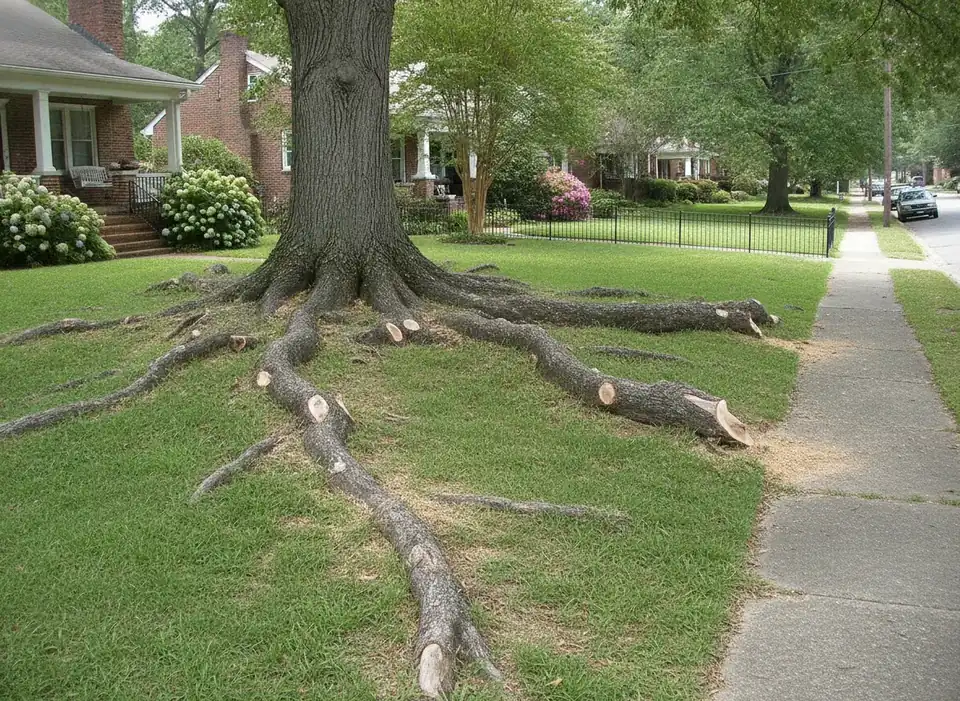
Surface roots that trip mowers and lift walks.
More on root grinding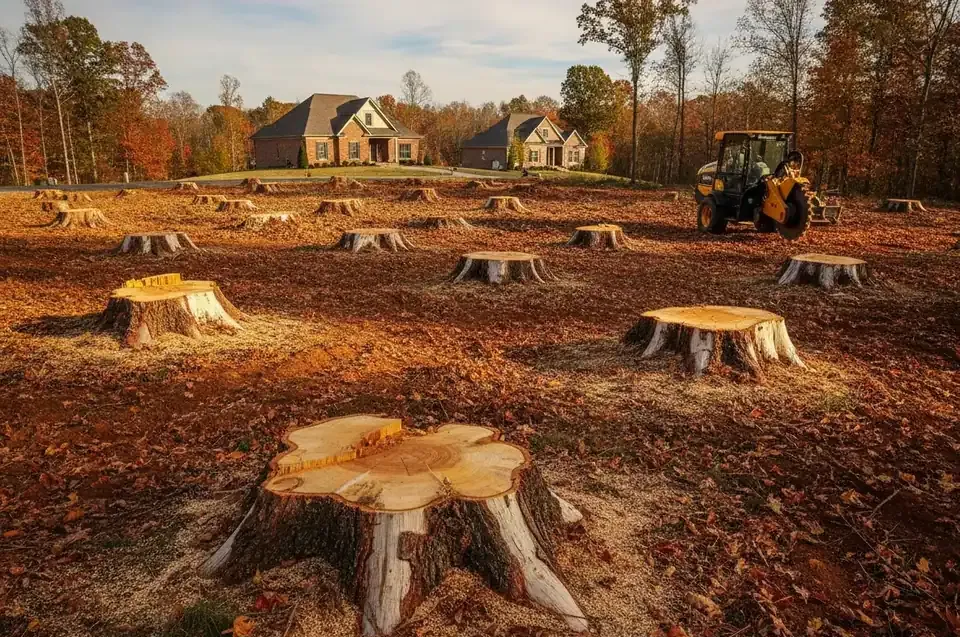
Several stumps in one visit, or a cleared lot.
More on multiple stumps & lot clearing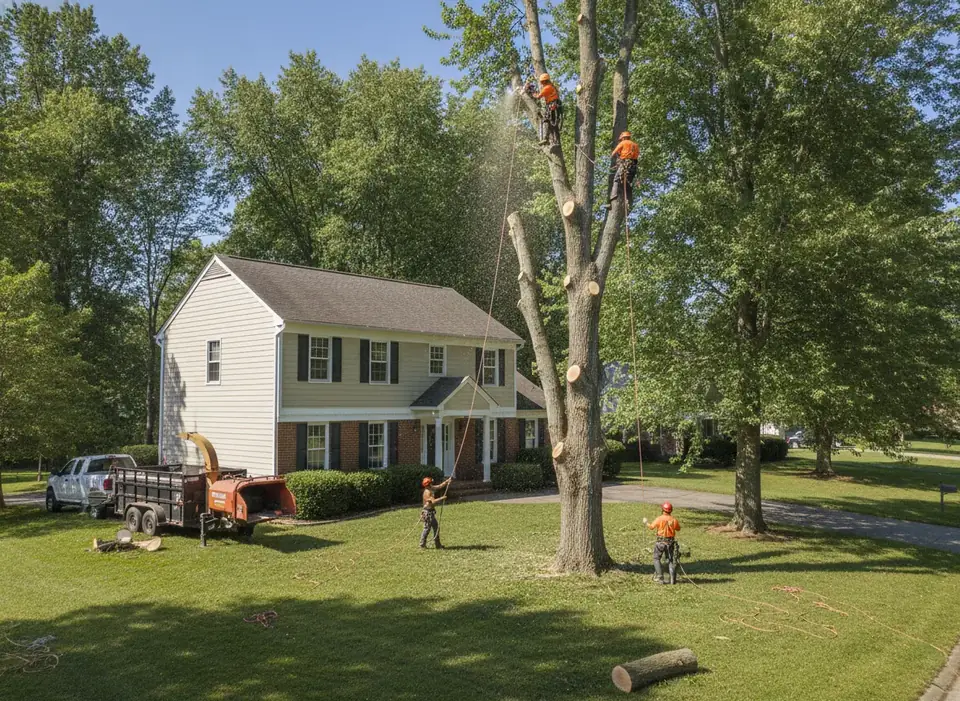
The whole tree, with the stump quoted as its own line.
More on tree removal + stump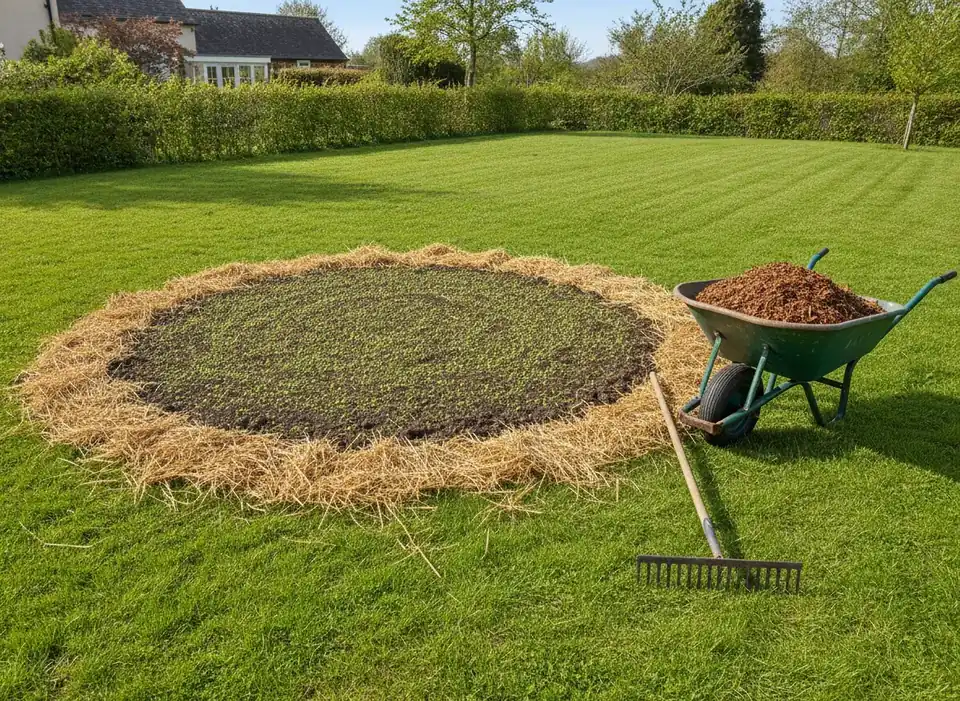
Chip haul-away, topsoil and seed.
More on cleanup, backfill & chip removal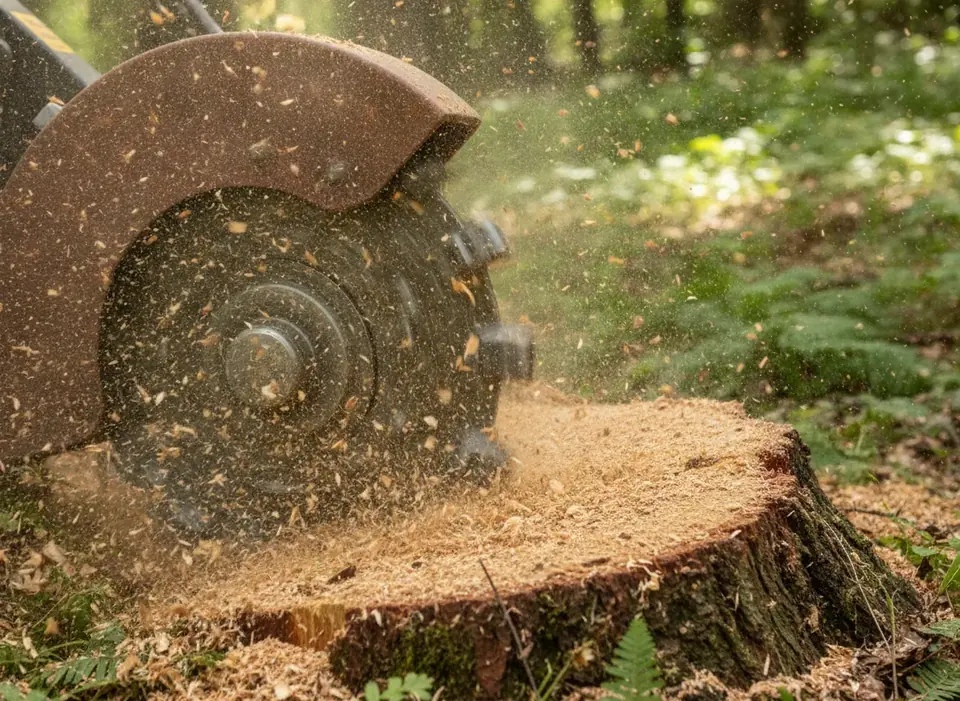
Downed or split trees and the stumps they leave.
More on storm-damaged treesWant numbers first? The stump grinding cost calculator gives a rough range from the count, diameter and cleanup you need.
Most Durham-area homeowners pay roughly $150–$450 to grind one average stump. Your quote depends on diameter, hardwood vs. pine, access, surface roots, and whether chips are hauled away and the hole is backfilled.
| Item | Typical range |
|---|---|
| One average stump, Durham area | about $150–$450 (Durham average about $327) |
| Per inch of diameter | $2–$5 per inch |
| Minimum charge | about $100 |
| Each additional stump | about $40–$70 |
| Chip haul-away | $2–$3 per inch, or about $80–$125 |
| Tree removal (Durham, typical) | about $400–$1,800; stump work usually extra |
At $2–$5 per inch, a 24-inch stump comes to $48–$120, so the $100 minimum often sets the floor. Every line, including stump sizes, roots, backfill and DIY rental, is on the cost page.
The City's 2017 tree canopy assessment found 36,600 acres of canopy, covering 52% of the city. Much of the street canopy is old: according to a 2019 EPA account, Durham planted about 13,000 trees across the city in the 1930s, mostly willow oaks, and those trees' long lives are coming to an end. As of 2014, the City's urban forestry manager put the number of mature willow oaks along Durham streets at around 8,000.
Housing age points the same way. In the Census Bureau's American Community Survey (ACS 2024 5-year estimates), ZIP 27701 downtown has a median home built in 1975, with about 56% of homes built before 1980. ZIPs 27704 and 27707 each have about 41% of homes built before 1980, while the city as a whole has a 1995 median. Older neighborhoods in National Register historic districts, such as Trinity Park, Forest Hills, Watts-Hillandale, West Durham and Hope Valley, tend to have the biggest trees.
Storms add to the count. Hurricane Hazel brought a 90 mph gust to RDU in 1954. Hurricane Fran in 1996 uprooted or broke several hundred thousand trees across central North Carolina, and the December 2002 ice storm coated Durham in half an inch to an inch of ice. A 2014 EF1 tornado near Hope Valley damaged about 40 homes, mostly from falling trees; Tropical Storm Michael's remnants in 2018 knocked out power to about 20,000 Durham County customers; and a 2024 EF1 tornado near Bahama snapped and uprooted trees in northern Durham County. Emerald ash borer was first detected in Durham County on August 6, 2015, so dead ash trees add more.
Some local Triassic-basin soils (White Store, Creedmoor) are high shrink-swell clays; Cecil and Appling are low. Either way, expect the fill to settle as chips decompose; top up after a few months.
North Carolina's 811 law defines excavation broadly and sets no minimum depth. Mechanized stump grinding appears to fit that definition. Notice must be given at least three full working days before work starts, and the ticket is valid for 28 days (G.S. 87-122). The homeowner exemption in G.S. 87-124 covers only an owner digging on their own single-family lot, not a contractor hired to do the work, so ask the company to confirm it will request a locate.
811 marks public utility lines only. Private lines such as irrigation, invisible pet fence, landscape lighting and power or gas to a shed are not marked, so flag those yourself before the grinder arrives. This is general information, not legal advice.
Durham's development code ties tree rules to development; for a tree or stump on an existing home lot, no permit requirement was found — check with the City if you're in a historic district or near the street. The exceptions to know:
On licensing: North Carolina has no license specific to stump grinding or tree work. The general contractor license applies only to jobs of $40,000 or more (G.S. 87-1), and the landscape contractor law excludes arboriculture and tree removal, land clearing and grading, and jobs under $30,000 (G.S. 89D-13). Applying stump-killer herbicide for hire does require an NCDA&CS commercial pesticide applicator license. This is general information, not legal advice.
According to the City's guidance, Durham doesn't take tree stumps at the curb; confirm with Durham One Call. Open burning inside Durham city limits is unlawful, according to the City's fire FAQ, and the state air rule (15A NCAC 02D .1903) allows burning yard debris at home only where no public pickup exists. Options for the grindings:
All of Durham and Durham County, plus nearby towns with their own tree and yard-waste rules.
See all towns on the service areas page.
Published cost guides put one average stump in the Durham area at about $150–$450, with a Durham average near $327. Many companies charge about $2–$5 per inch of diameter with a minimum around $100, and each additional stump often adds about $40–$70. Hardwood, surface roots, chip haul-away and backfill add to the price, so ask for every item in a written quote.
Mechanized grinding appears to fit the broad definition of excavation in North Carolina's 811 law, and the law sets no minimum depth. Notice is due three full working days ahead and stays valid for 28 days. The homeowner exemption covers only an owner digging on their own lot, not a company hired to do it, so ask the company to confirm it will request a locate.
According to the City's guidance, tree stumps aren't collected at the curb and go to the Waste Disposal and Recycling Center on East Club Boulevard instead; confirm with Durham One Call at 919-560-1200. Most homeowners have the company haul the debris or keep the grindings as mulch. Burning isn't an option inside city limits.
Residential grinding typically goes about 6–12 inches below grade, which is usually enough to lay seed or sod. Deeper grinding costs more. If you plan to plant a new tree, set a patio or put a fence post where the stump was, ask for extra depth and have the depth written into the quote so there's no confusion on the day.
No. Stump Grinding Durham is a free quote service. We connect Durham-area homeowners with independent local stump grinding and tree companies for free, no-obligation quotes. The independent company you choose quotes, schedules and does the work directly with you, sets its own price, and is responsible for its own insurance and any permits.
More answers are on the FAQ page.
Stump Grinding Durham is an independent quote service and is not affiliated with any company of a similar name.
Stump Grinding Durham does not grind stumps or remove trees; the independent company you choose quotes, schedules and does the work directly with you.
Tell us how many stumps and where, and independent local grinders can send no-obligation quotes.