
What to Do After Stump Grinding
Free quotes from independent local stump grinding companies. We connect Durham-area homeowners with independent local stump grinding and tree companies for free, no-obligation quotes; Stump Grinding Durham does not grind stumps or remove trees.
When the grinder pulls away, you are left with a low mound of wood chips and soil where the stump stood, and the old roots are still underground. What you do next depends on what you want there: lawn, a garden bed, mulch or a new tree. This guide covers the chips, the hole, settling, mushrooms, sprouts and disposal rules in Durham and nearby towns.
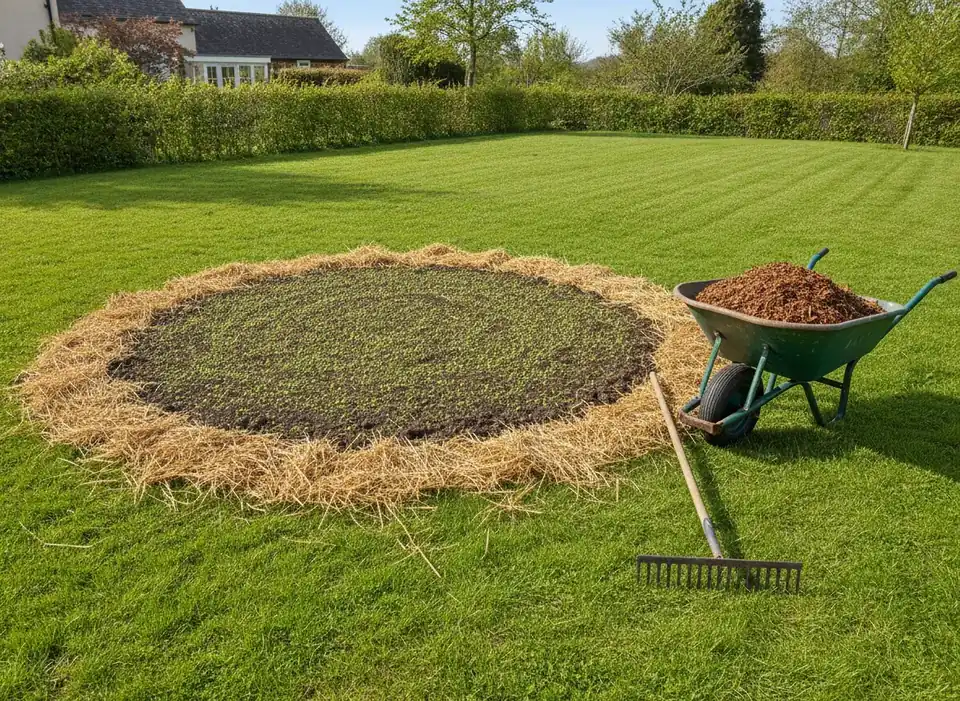
Step 1: Decide what to do with the grindings
A grinder leaves a mix of wood chips and soil, usually more than the stump's own volume. You have three choices:
- Use them as mulch. Spread them on the surface of beds or around shrubs. Let fresh chips age before using them heavily, and keep mulch from piling against the house.
- Use some as fill. It is tempting to rake everything back into the hole, but a hole full of chips will sink as they rot.
- Have them hauled away. Haul-away typically runs $2–$3 per inch of stump diameter, or about $80–$125.
If you will grow grass on the spot, take most of the chips out. Oregon State University Extension says mixing wood chips into soil gives them a greater tendency to tie up nitrogen, which can starve new grass. Chips left on the surface as mulch are less of a concern.
Step 2: Fill the hole with topsoil
Once the bulk of the chips is out, fill the hole with topsoil and firm it down in layers. If the company you hire does the backfill, published cost guides put topsoil at about $50–$100 per hole, and seed or sod at about $75–$200. Ask whether backfill is in the quote before the job starts; many quotes cover grinding only. The cleanup, backfill and chip removal page explains what to ask for.
| After-grinding item | Typical range |
|---|---|
| Chip haul-away | $2–$3 per inch, or about $80–$125 |
| Topsoil backfill per hole | about $50–$100 |
| Seed or sod | $75–$200 |
| Surface root grinding | about $100–$200 per hour |
Step 3: Expect settling and top it up
Roots left underground keep breaking down for years, and buried wood shrinks as it decays. Expect the fill to settle as chips decompose; top up after a few months. Add topsoil to bring the spot level and reseed bare patches. Parts of the Durham area have clay soils that hold water and shift, especially the Triassic-basin soils such as the White Store and Creedmoor series, which soil surveys rate high to very high for shrink-swell. Watching the spot through a wet season and topping it up is the simple fix.
Step 4: Plant grass, a bed or a new tree
Grass. Once the hole is filled with topsoil and firmed, you can seed or sod. Cool-season or warm-season timing for your grass type matters more than the stump does.
A garden bed. Beds can go in sooner; aged chips can top the bed as mulch.
A new tree. Typical grinding goes about 6–12 inches below grade, which leaves old roots below that. If you plan to plant a tree in the same spot, ask the company for a deeper grind or more root removal, and get the depth in writing. Planting a little off to the side of the old stump is another common approach. See stump grinding vs. removal if you are deciding how much to take out.
Mushrooms, termites and sprouts
Mushrooms. NC State Extension describes lawn mushrooms as decomposers of dead organic matter like buried wood and old tree roots. Mushrooms where the tree used to be are a sign of harmless decay, not a lawn disease. NC State also notes that removing buried woody debris before planting turf can help prevent fairy rings.
Termites. Termites feed on almost anything with cellulose, including old roots. NC State Extension says termite swarmers found outdoors near stumps are not an indication that your house is infested. If the stump was close to the foundation, an inspection is a sensible precaution.
Sprouts. Some species come back from the roots. NC State lists tree-of-heaven, black locust and mimosa as sprouters, and USDA Forest Service research documents sweetgum sprouting from low stumps. Pull or cut sprouts as they appear. For persistent sprouting, a herbicide treatment may be needed; a company applying it for hire needs an NC commercial pesticide applicator license from NCDA&CS, so ask for the number.
Step 5: Deal with surface roots
Grinding usually covers the stump itself. Roots running across the lawn are often priced separately, at about $100–$200 per hour in published guides. If roots are lifting a walk or catching the mower, surface root grinding can take them down below the soil line.
Disposal rules: curbside, drop-off and burning
Durham. Durham doesn't take stumps at the curb, according to the City's guidance; confirm with the City before you plan on it. The same guidance points residents to the Waste Disposal and Recycling Center on East Club Boulevard for stumps. Durham's yard waste collection is a paid subscription, and bundles have size limits, so a pile of grindings is generally better kept as mulch or hauled away by the company.
Nearby towns. Chapel Hill excludes stumps from yard waste collection; its 2023 Town flyer says large logs, stumps and lot clearing debris cannot be collected. If you are in Chapel Hill, plan on haul-away or reuse. Several towns, including Carrboro and Apex, say they won't collect debris cut by a private contractor, and Apex doesn't accept root balls.
Burning. Open burning inside Durham city limits is unlawful, according to the City's fire FAQ. Under the state air rule (15A NCAC 02D .1903), burning yard debris at a home is allowed only where, among other conditions, no public pickup service is available. Burning grindings in the city is not an option.
This is general information, not legal advice.
A short after-grinding checklist
- Decide: mulch, fill or haul-away for the chips.
- Remove most chips where grass will grow.
- Fill with topsoil and firm it in layers.
- Seed, sod or plant.
- Top up after a few months as it settles.
- Watch for sprouts and pull them early.
Planning the job now? Compare typical prices in the Durham stump grinding cost guide, and read how long a stump takes to rot if you are weighing leaving the roots alone.
Quick answers
How long after stump grinding can I plant grass?
Once most of the chips are removed and the hole is filled with topsoil and firmed, you can seed or sod. Timing for your grass type matters more than the stump. Leftover chips mixed into soil can tie up nitrogen, according to Oregon State Extension, so clear them first. Expect some settling; top up with soil after a few months.
Are stump grindings good mulch?
They can be. Spread them on the surface of beds or around shrubs rather than mixing them into the soil, let fresh chips age before heavy use, and keep mulch from piling against the house. If you don't want the chips, haul-away typically runs $2–$3 per inch of stump diameter, or about $80–$125, in published cost guides.
Why are mushrooms growing where my stump was?
According to NC State Extension, lawn mushrooms are decomposers feeding on dead organic matter such as buried wood and old roots. After grinding, the roots left underground are rotting, and mushrooms are a visible sign of that harmless decay. They are not a lawn disease and usually fade as the buried wood breaks down.
General information, not legal advice. Stump Grinding Durham is a free quote service. It connects Durham-area homeowners with independent local stump grinding and tree companies; the company you choose quotes, schedules and does the work directly with you.
Ready to compare prices? Get a Free Quote from independent local companies. Call (727) 300-6656