
The Stump Grinding Process, Step by Step
Free quotes from independent local stump grinding companies. Here is what a typical Durham-area stump grinding job looks like, from measuring the stump to the last bag of topsoil, so you know what to ask before anyone starts the machine.
Get a Free Quote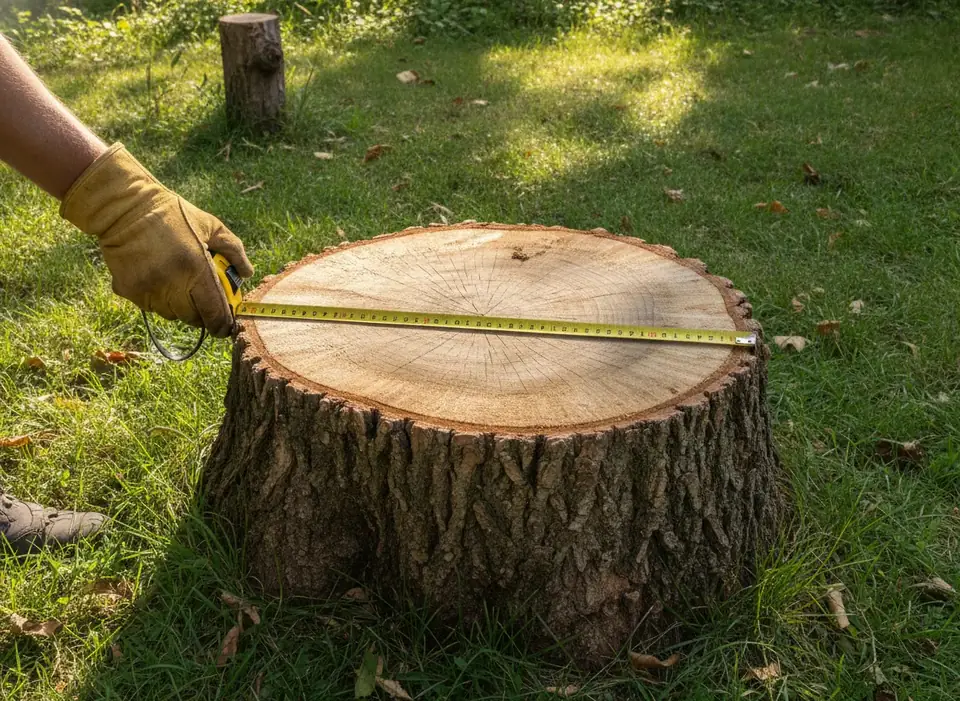
Before you start: what this page covers
Stump Grinding Durham is a free quote service. We connect Durham-area homeowners with independent local stump grinding and tree companies for free, no-obligation quotes. We don't grind stumps ourselves; the company you choose quotes, schedules and does the work directly with you. The steps below describe how the job usually goes so you can compare quotes on equal terms.
Most stumps are priced by diameter, so the first step is a tape measure. For typical prices, see the Durham stump grinding cost guide.
Eight steps from quote to cleanup
Times and methods vary by company and by stump. Use these steps as a checklist, not a promise of how any one company works.
Count and measure your stumps
Count the stumps you want ground and measure each one straight across the top with a tape measure. Note the wood if you know it (oak and other hardwoods often cost more than pine), any surface roots you want ground, and how a machine would reach the stump: gate width, slope, steps and distance from the driveway.
Request free quotes
Send the free quote form with the number of stumps, rough diameters, access notes and whether you want chips hauled away or the hole backfilled. We pass your request to independent local stump grinding and tree companies that serve your ZIP code, and a company typically calls to confirm details or set up a look.
Get a written quote
Ask for the quote in writing. It should state the number and size of stumps, the grinding depth below grade, whether surface roots are included, chip cleanup or haul-away, topsoil backfill and seed, and any minimum charge. Ask for a liability insurance certificate and, for a company with three or more employees, check its workers' compensation coverage.
Confirm the NC 811 locate
Mechanized grinding appears to fit North Carolina's legal definition of excavation, so ask the company to confirm it will request an NC 811 locate. Notice must be given at least three full working days before work starts, and the ticket is valid for 28 days. 811 marks public lines only, so flag private irrigation, invisible dog fence, landscape lighting and lines to sheds yourself.
Clear the area before grinding day
Move cars, grills, planters and outdoor furniture away from the stump, unlock gates, and keep children and pets inside while the machine runs. A grinder throws chips and small stones, so the operator may set up shields near windows or siding. Mark sprinkler heads and anything else in the lawn you don't want driven over.
The grinder operator grinds the stump
The operator lowers a spinning cutting wheel with carbide teeth onto the stump and sweeps it side to side, chewing the wood into chips a layer at a time. Typical residential grinding goes about 6 to 12 inches below grade. Ask for deeper grinding if you plan to plant a new tree or build where the stump stood; deeper grinding costs more.
Handle the chips and the hole
Grinding leaves a hole full of wood chips and soil, usually more volume than the stump itself. Depending on your quote, the company rakes the grindings back into the hole, leaves them as mulch, or hauls them away and backfills with topsoil. If you'll plant grass there, have most chips removed; chips mixed into soil can starve new grass of nitrogen.
Watch the spot for a few months
Expect the fill to settle as chips and roots decompose, and top it up with soil after a few months before reseeding. Mushrooms that pop up are harmless decay of buried roots. Some trees, such as tree-of-heaven, black locust, mimosa and sweetgum, can send up sprouts; stopping them may need a herbicide plan from a licensed applicator.
What changes the job
- Diameter and wood. Bigger stumps take longer. Hardwoods such as oak usually take more work than pine.
- Surface roots. Roots running across the lawn are often quoted separately, by the hour. See root grinding.
- Several stumps. Each extra stump usually costs less than the first. See multiple stump grinding.
- Grinding versus pulling. Grinding leaves roots to rot in place; full extraction digs them out. Compare them on the stump removal page.
- Cleanup. Chip haul-away, topsoil and seed are often extras. See cleanup and backfill, and read what to do after stump grinding.
Street trees and historic districts. If the stump is in the strip between the sidewalk and the street, it may be the City's tree; call Durham One Call (919-560-1200) and ask Urban Forestry before hiring anyone. In a local historic district, removing a tree is landscaping site work that needs a Certificate of Appropriateness. This is general information, not legal advice.
Questions not covered here are on the stump grinding FAQ. When you're ready, request free quotes.
Got a stump in the way? Get free quotes.
Tell us how many stumps and where, and independent local grinders can send no-obligation quotes.